See inside
The real tool, not a mockup
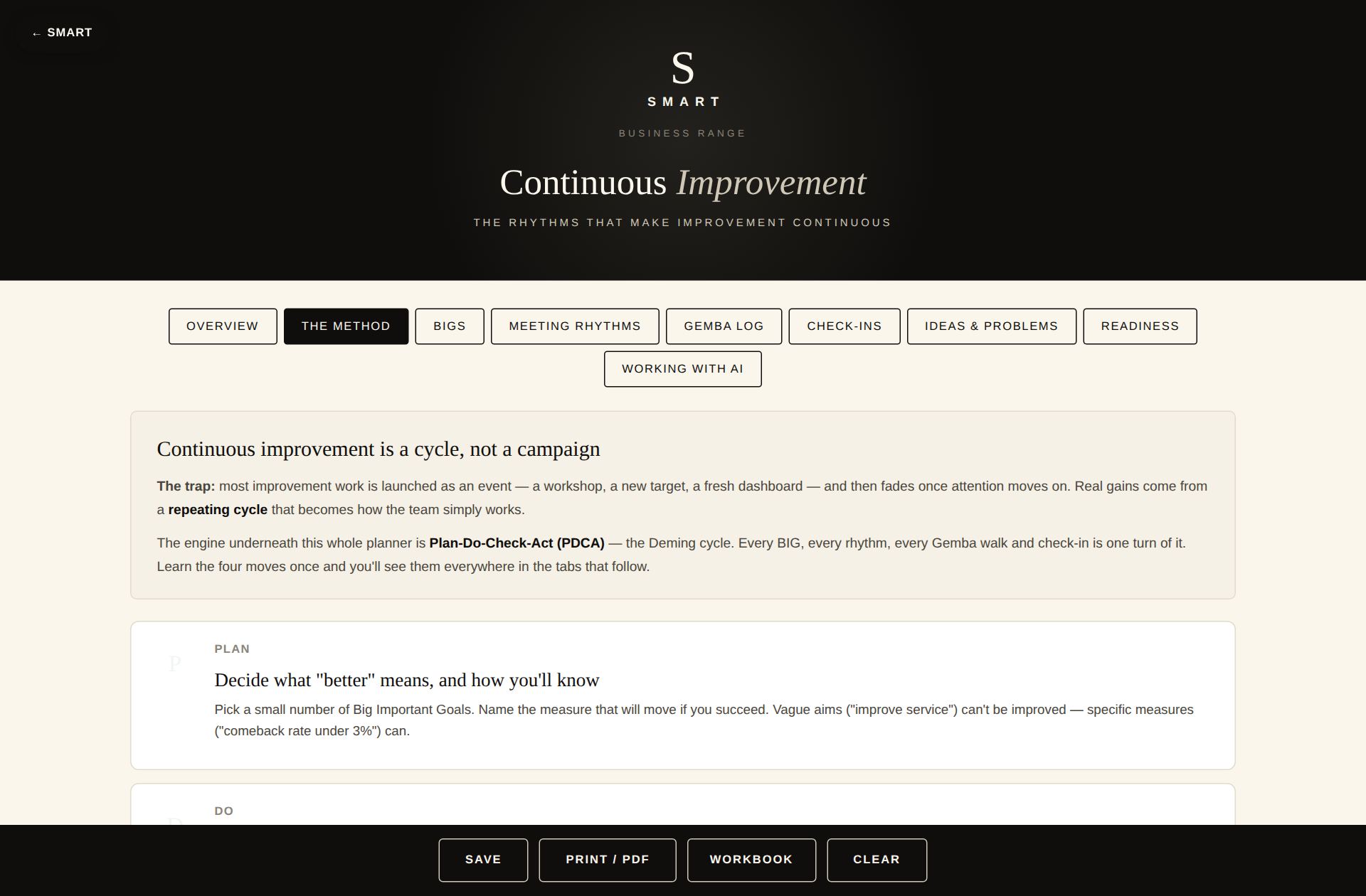
The Method tab — PDCA taught, then tracked · every planner has this level of built-in teaching
Continuous Improvement — Big Important Goals, meeting rhythms, Gemba walks, check-in loops and frontline problem-solving, in one working planner. The system that turns good intentions into gains that actually stick.
Not because the idea was wrong, but because it lived in a launch and not a rhythm. The board stopped being updated, the walks stopped happening, the commitments quietly slipped, and within a month everyone was back to the old way. This is the structure that keeps improvement alive between the big moments.
Three at most, each with an owner, a success measure, a visible status and its ownable improvement targets. If everything is a priority, nothing is.
Define the cadences that keep improvement alive — daily huddles, weekly reviews — with the board each one is married to, so meetings and visibility stay together.
Go and see. Observation at the place the work happens, with one rule: every row ends in an action. An observation with no action is just a visit.
The 1:1 rhythm that closes commitments — last commitment reviewed before a new one is set, so nothing quietly slips between check-ins.
A route in for frontline ideas and problems, plus a simple root-cause pass that gets you past the symptom to something you can actually change.
Ten points that end on the real test: would this rhythm survive you being away? If it falls apart at day 90 in your absence, it isn't a system yet.
Responsible for performance that has to improve — and hold — quarter after quarter, not just spike once.
Running the daily rhythms, the boards and the walks, and wanting them to add up to something that lasts.
Building improvement into how the business simply works, so gains don't depend on you personally chasing them.
Opens in your browser, saves as you type. Seven working views — overview, BIGs, meeting rhythms, Gemba log, check-ins, ideas and problem-solving, and the readiness checklist. Nothing to install.
A print-and-fill PDF version for walking a team through the rhythm, or working it through by hand.
Want to turn improvement numbers into clear, confident calls faster? The free SMART AI guide library shows you how — including a worked example, Working With Your Numbers, that turns data like this into decisions you can defend.
Explore the free guides →